



































Choose the Badge and Its Display Card Together
Define whether the retailer is buying loose badges, individually carded pieces or a fixed set before comparing quantities and presentation options.
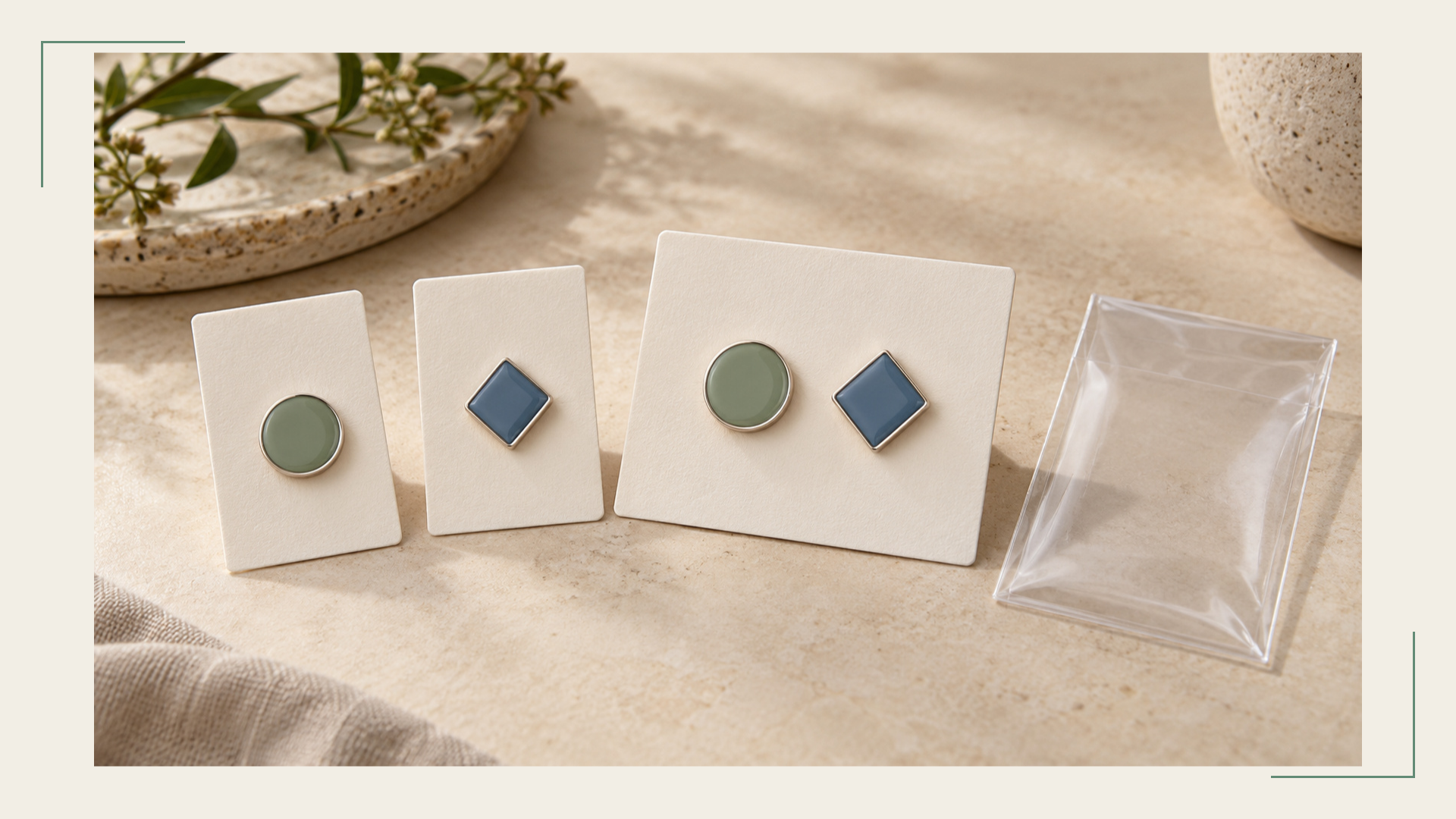
For a badge range, I would ask the buyer to describe what a customer would pick up from the display. Would it be one loose badge, one badge on a card, or several designs sold together? I would put that choice beside the enquiry quantity before comparing quotations. A price for a loose piece and a price for a finished carded item would otherwise sit in the same column, while leaving the retailer to work out the packing later.
The card would get a reference separate from the badge artwork. I would ask for a layout showing the actual badge position, its outline and any printed information around it. If the card had a hanging hole, I would want it visible on that layout. The buyer could then decide whether the badge covered part of the print or whether the proposed display position needed changing. A blank card in a sample photograph would not settle the layout of the printed version.
I would also ask what was supplied behind the card. PinMart's custom-pin ordering options list attachment choices separately from presentation packaging. That is a useful example of two decisions that belong in the enquiry, although its options and prices would not define another supplier's offer. For the quoted item, I would request front and rear sample views and a description of the fastening supplied. If the supplier changed the fastening, I would ask to see the revised carded sample before agreeing to it. I would not assume every attachment fitted the same card arrangement.
For a set containing several designs, I would mark each design's place on the card. The order line would state one complete set and list how many of each badge it contained. I would ask the supplier to quote assembly of that exact set, including the selected card and any outer packaging. If a design was offered as a separate single item too, it would have a different order reference. I would not rely on the badge design name alone to distinguish the loose piece from the finished set.
When choosing the assortment, I would give the buyer a way to change the design quantities without losing those packing references. Each design or fixed set could have its own row with the number of saleable units proposed. The supplier would need to confirm any minimum quantities applying to the badge design, the printed card or the assembly. I would ask which requirement caused a proposed quantity change, rather than apply the same minimum to every component without checking.
I would finish with a sample of the complete item as it would be delivered. The approved record could include the badge face, the reverse fastening and the card inside its selected outer packaging. If the buyer later changed the card print, I would ask whether that change affected any stock already ordered and request the revised layout for approval. The packing list would count the agreed saleable units, with the badge contents of each set still stated. That would give the retailer a clear distinction between a carton of individual badges and a carton of assembled sets, even when some of the designs were the same.
Share the product, specifications, quantity and destination to discuss sourcing options.