


































Choosing a False Lash Range When the Catalogue Photos Look Alike
Compare labelled lash samples before committing to several similar styles, and keep the style decision separate from the number of pairs in a pack.
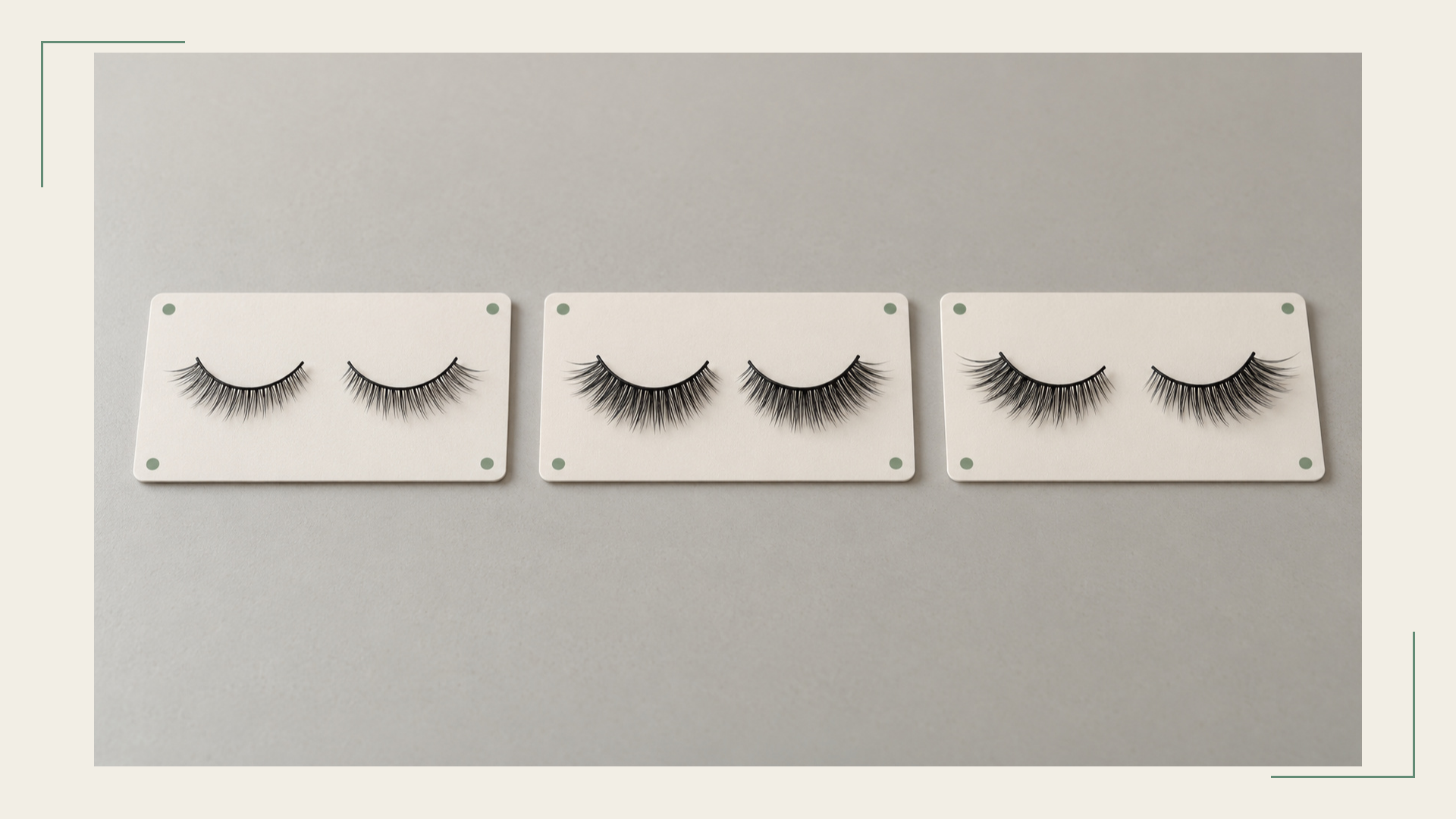
Three lash styles can look remarkably similar on a catalogue page. If I were putting together a small range, I would hesitate before ordering all three. A different product code is useful for ordering, but it does not tell me what distinction I could explain to a shopper. I would want the samples together, out of the lighting and camera angles chosen for each individual photograph.
For strip lashes, my comparison would start with the shape along the strip. Where are the longest fibres: towards the middle, towards the outer end, or spread across much of the band? I would lay the labelled samples in the same orientation and photograph them together. That would let me compare the actual outlines without trying to remember which end was which in another supplier's picture. Any claimed fibre lengths would go in the notes beside the relevant sample, using the supplier's stated measurement method. A ruler placed somewhere behind a curved lash would not be enough for me to accept a dimension.
The band would get a separate look. I would ask for its material and construction, then compare the sample with the description rather than infer those details from a dark line in a photograph. A product can be described as “natural” without that word telling us what its fibres or band are made from. Nor would I treat “natural” as a promise about the effect on every wearer. For a listing, I would rather describe the particular shape visible in the sample and use the material information the supplier can substantiate.
I would keep the supplier's labels on while making those comparisons. If two samples still looked alike, my next enquiry would go back with a photograph of both and their codes. I would ask the supplier to identify the difference on that photograph. A corrected sample might be needed if the wrong style had been sent. Otherwise, the explanation could be added to the buying notes and checked against what was on the desk. I would choose shop names only after that exchange, with a reference photograph for each name. That way a later reorder could point to the sample, rather than rely on a description such as “the fuller one.”
Quantity needs a little care here. I would write “pairs per retail pack” in the comparison sheet and have that field completed for each offer. A tray full of lashes in the catalogue might be showing the style range, not the unit being quoted. If I wanted the selected style in two pack sizes, I would keep its sample reference on both lines and put the requested quantities alongside them. I would also ask whether any adhesive, liner or applicator in the photograph was part of the offer. The answer would go into the proposed listing before choosing photographs for it.
For the final range review, I would print the proposed listing pictures together and set the labelled samples beside them. I would try to match every picture to its sample without looking at the filenames. If that meant going back to the supplier's code each time, the pictures would need another look. A close-up of the fibre outline could make a difference that a distant tray photograph had hidden. Two styles might still be too similar to explain separately; in that case I would leave one out of the initial order and retain its sample notes. There would be somewhere concrete to return to if customer enquiries later suggested a reason to add it.
Share the product, specifications, quantity and destination to discuss sourcing options.