


































Cabinet Pull Quotes Need Two Different Lengths
Separate fixing-hole spacing from the visible length, then tie screws, finish samples and packing to the quoted pull.
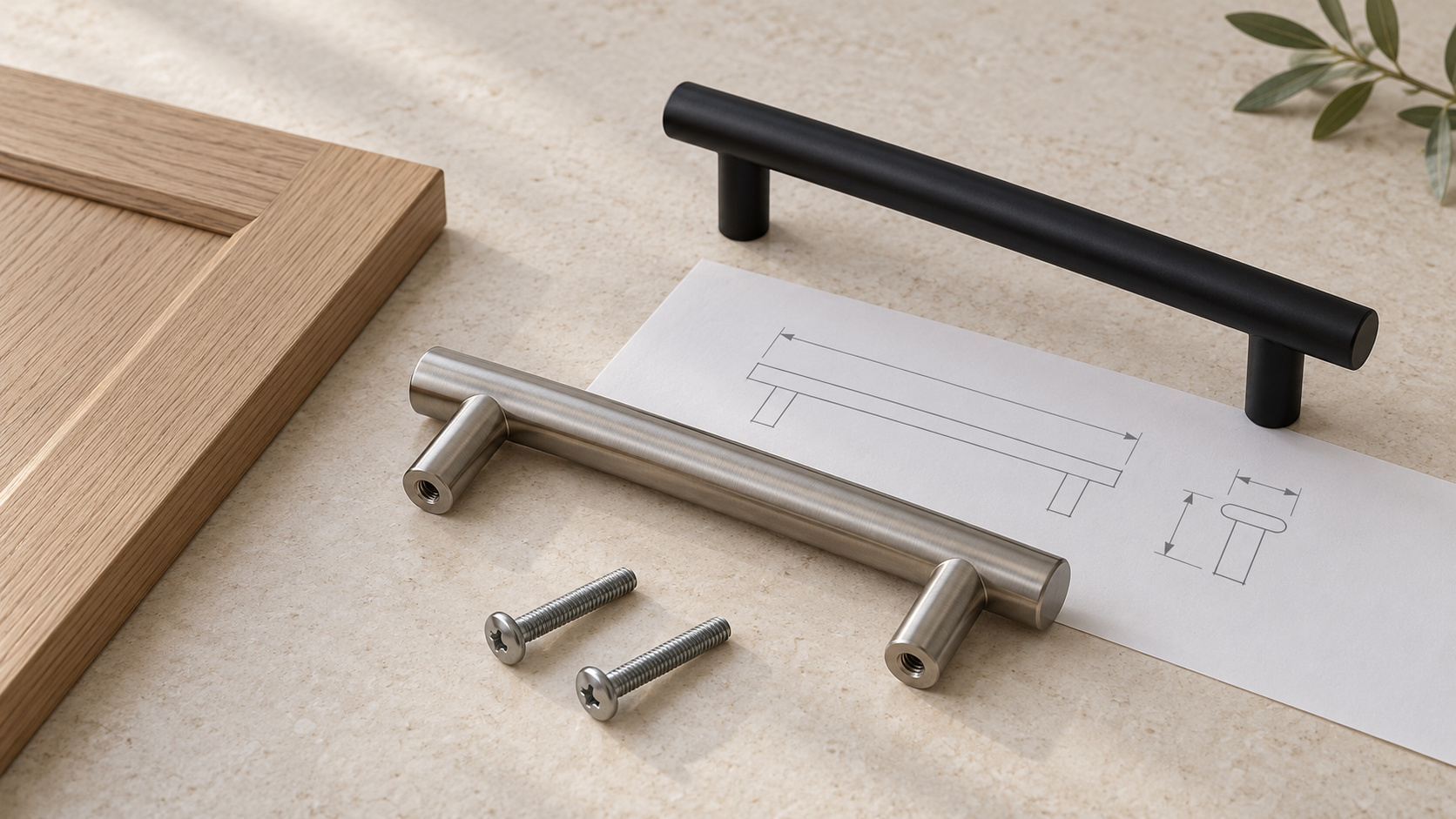
A cabinet pull enquiry can start with a photograph and one length. Before sending it out, I would ask what that length refers to. Is it the distance between the fixing holes, or the length seen across the drawer front? Both belong in the enquiry. A supplier should not have to guess which one the buyer measured, especially when the order is intended for panels that have already been drilled.
I would put the fixing-hole centres on a drawing and give the overall length its own dimension. A side view would show how far the pull projects from the front surface. Hettich's published Avenio product information provides an example of hole spacing and length appearing as separate fields. Those are dimensions of that manufacturer's particular model; they are not a specification for an unbranded pull from another supplier. For the enquiry, I would ask for the drawing of the actual offered item.
There is a practical reason to keep the photograph. It can explain the shape the buyer wants: a straight bar, curved ends or a different grip profile. I would attach it as an appearance reference alongside the drawing, with any undecided details marked. If the supplier offered an alternative shape, I would want its drawing returned with the price. Otherwise a low-priced substitute could stay in the comparison long after everyone had forgotten that its dimensions were different.
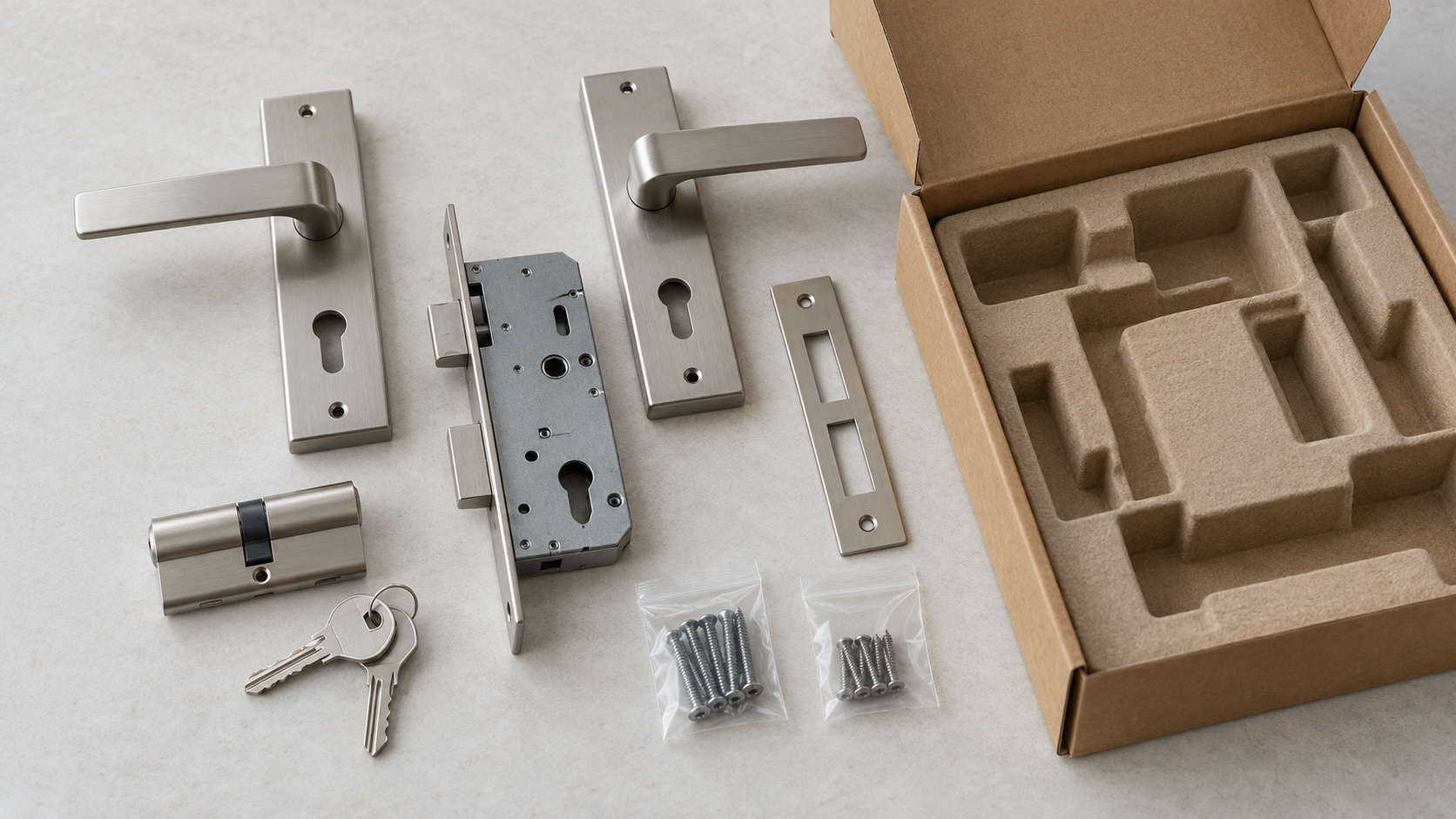
The screws would need a line in the quotation too. I would give the intended panel thickness and ask the supplier to confirm the proposed fixing arrangement, including the screw specification and quantity supplied with each pull. A photograph of loose screws would not settle that question. If there were several panel constructions in the project, I would list them separately for confirmation. I would leave the selection of a suitable fixing to the responsible supplier or installer, rather than make up a screw length from the front-view photograph.
For a finish decision, I would request a physical sample carrying the same item and finish references as the offer. The buyer could look at it beside the intended cabinet surface. A screen image would remain useful for discussing colour, but I would not use it as evidence of the sample's texture or as a corrosion test. Any required performance assessment would need its own agreed method and records. If the finish changed after sampling, the revised reference would have to reach the order as well.
Before placing the order, I would ask what is inside one saleable pack. A pull alone, a pull with two screws and a boxed pair are different quantities to receive and distribute. The order sheet could state the number of pulls, the included fixings and the agreed protective packing for each item code. I would keep the accepted drawing and sample reference with that sheet. When a later carton arrived, there would then be something specific to check against: the quoted item, its fixing contents and the finish that had actually been selected.
Share the product, specifications, quantity and destination to discuss sourcing options.